General Discussion
Related: Editorials & Other Articles, Issue Forums, Alliance Forums, Region Forums
Ukraine war: mixed signals among Kyiv's allies hint at growing conflict fatigue

https://theconversation.com/ukraine-war-mixed-signals-among-kyivs-allies-hint-at-growing-conflict-fatigue-213913
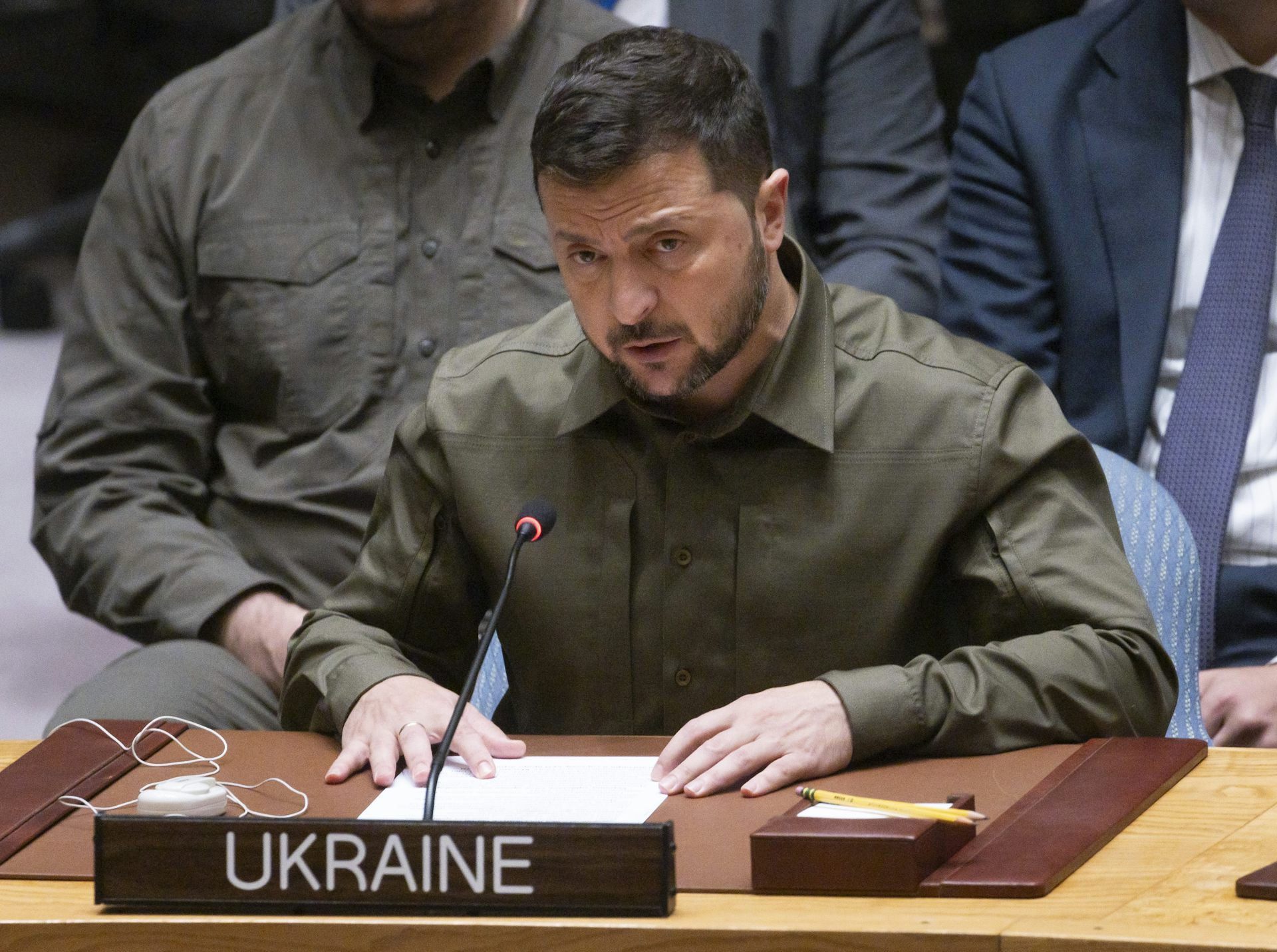
It is now almost 600 days since Russia launched its full-scale invasion of Ukraine, and the war that has followed has tested the resilience of both countries. But it has also tested those in the west that have supported Ukraine from the start. This much was evident from the mixed reception Ukraine’s president, Volodymyr Zelensky, received last week when he visited the US and Canada. Meanwhile, tensions in Europe over support for Ukraine have flared up again. With the Ukrainian counteroffensive still not living up to – the perhaps inflated – expectations, we are beginning to see the first serious signs of a fraying consensus in the west about how seriously different governments are committed to supporting Ukraine for as long as it takes.
Zelensky’s North American visit started with a speech at the UN general assembly in New York in which he made a passionate appeal to fellow world leaders to uphold international law and order and support his country. While there remains widespread backing for the principles of sovereign equality and territorial integrity, it gets fuzzier when it comes to how to end the war. There are two camps: many western leaders following Ukraine’s line that the country’s territorial integrity needs to be restored first. Others – including a large number of countries in the global south – prefer to emphasise the importance of dialogue and an early cessation of violence. This pattern was repeated the following morning at the UN security council’s open debate on the war in Ukraine, with a predictable clash between Zelensky and the Russian foreign minister, Sergey Lavrov, who presented very different accounts of causes and dynamics of the war.
But before the debate could conclude, the security council turned its attention to the crisis in Nagorno-Karabakh, a clear indication that Ukraine is not the only urgent issue on the global agenda. Zelensky continued to Washington DC where he secured another military aid package worth US$325 million (£192 million). This aid can be allocated by US president Joe Biden directly under the so-called presidential drawdown authority. A further US$24 billion in aid, which is subject to congressional approval, is more problematic. The Republican House majority leader, Kevin McCarthy, would not commit to putting a bill to that effect on the legislative schedule before the end of the year. McCarthy also denied the Ukrainian president an opportunity to address a joint session of the House and the Senate, another sign of growing Republican resistance to the enthusiastic support offered to Ukraine by the Biden administration. Moving up to Canada, Zelensky received a universally warm reception and left with a military aid package worth C$650 million (£394 million).
Europe: growing division
Meanwhile, in Europe, three of Kyiv’s neighbours inside the EU – Hungary, Poland and Slovakia – defied the end of an EU-wide ban on grain imports from Ukraine. Poland then went one step further and also put a – temporary – halt on any weapons deliveries to Ukraine. This was decried by Zelensky in his speech before the UN general assembly as “political theatre” and a gift for Moscow. The grain dispute between Poland and Ukraine has been simmering for some time, and it was a question of when, not if, it would ultimately escalate. Importantly, it foreshadows other potential obstacles in Ukraine’s path to EU membership. Some of these are potentially within Ukraine itself. As Ursula von der Leyen, the president of the European Commission, noted in her annual state-of-the-union address at the European parliament, “accession [to the EU] is merit-based”, she acknowledged “the great strides Ukraine has already made”. But accession negotiations will not be opened before a positive recommendation from the commission on Kyiv’s progress concerning seven conditions set in June 2022 when Ukraine was granted candidate status. This decision is expected before the end of 2023.
snip
 = new reply since forum marked as read
Highlight:
NoneDon't highlight anything
5 newestHighlight 5 most recent replies
= new reply since forum marked as read
Highlight:
NoneDon't highlight anything
5 newestHighlight 5 most recent replies

Lovie777
(22,835 posts)Russia still killing civilians and stealing children. Poland and Slovakia still remains solid supporters.

Emrys
(9,090 posts)Duda has said they're looking at ways to assist the shipment of grain from Ukraine to elsewhere in the world where it's needed, and the "threat" of ceasing arms supplies by Morawiecki was quickly walked back, even before the impending Polish elections which probably spurred him on.
Strelnikov_
(8,150 posts)https://www.understandingwar.org/backgrounder/it%E2%80%99s-time-west-embrace-ukraine%E2%80%99s-way-war-not-doubt-it
. . .
But the Ukrainian forces have done what successful militaries do — they have adapted and are now advancing. Ukraine recognized the realities of Russian defenses much faster than Western policymakers, who were expecting a rapid Ukrainian breakthrough. ISW previously wrote in July that Ukrainian forces had adapted their tactics after they encountered initial setbacks and were increasingly successful in using small infantry assaults backed by precision fires to make inroads against Russian defenses.[1]
Ukraine’s ingenuity is yielding results. Ukraine maintains the battlefield initiative and its forces are advancing in Zaporizhia Oblast and near Bakhmut. Ukraine continues to liberate its territory and people and is slowly but steadily breaking through an incredibly formidable Russian prepared defense — and the Russian forces are unable to stop the advance, which is now moving in two directions.
Additionally, Ukrainian asymmetrical tactics in the Black Sea are preventing Russia’s Black Sea Fleet from operating freely, forcing Russia to reposition naval assets, and increasingly challenging Russian forces in Crimea — all operational developments of strategic significance.[2]
Ukraine’s way of war has yielded repeated successes against Russian forces. Ukrainian forces have, with Western support, defeated Russian objectives repeatedly: in Kyiv, in Kharkiv, in Kharkiv Oblast, in Kherson, and now, to a growing extent, in Ukraine’s south. Ukraine has prevented Russian forces from establishing air dominance and is eroding Russian naval superiority and increasingly making the Russian military’s presence less tenable in Crimea — realities that were previously unthinkable to many.

marble falls
(71,742 posts)
Recycle_Guru
(2,973 posts)none of those nations has expended a drop of blood in the fight against Putin's brutal invasion of Ukraine yet they are getting "tired".
Fuck them. It will be them next.
I think this "article" is actually thinly veiled Russian propaganda trying to break the resolve of NATO and other Ukraine allies, and I hope you realize that.
Bringing it back to politics and Democrats, this is why what is happening to Trump in the courts is so important. He should never get close to WH again.
Emrys
(9,090 posts)and was out of date when published.
For instance, since when has Hungary been seen as an ally of Ukraine (or indeed a reliable one of any country that matters in Europe)?! And as I wrote above, the grain dispute with Poland's actually showing signs of being very shortlived, and the Polish government's been eager to re-emphasize its resolve in supporting Ukraine after Morawiecki's ill-considered attempt at election-time chicanery.