General Discussion
Related: Editorials & Other Articles, Issue Forums, Alliance Forums, Region Forums
What to Do About the Mess We're in?
Last edited Wed Jan 28, 2026, 06:23 PM - Edit history (1)
(I originally wrote this as an excessively-long reply to another post.)
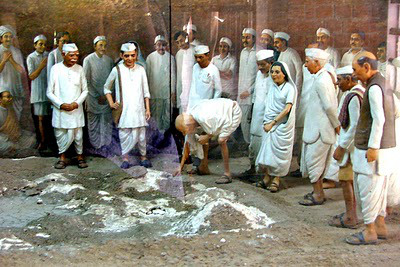
1. Many observers believe that the most effective forms of action involve prolonged general strikes, hitting oligarchs in their pocketbooks. (Other forms can sometimes be effective, of course; but many experienced activists have realized that, e.g., both governmental officials and the media are perfectly capable of ignoring protests they're not sympathetic to – see, e.g., the protests against our 2003 invasion of Iraq, which were the largest in history at that time but which were virtually blacked out in the media and had no effect on our government's actions.)
The poorer we are (due to income/wealth gaps, etc.), the more difficult general strikes become. And the more thoroughly surveilled and censored we are, the more difficult almost any form of resistance becomes.
2. Effective action will require not only that we try to elect people who will truly represent us, but also that that we organize – preferably from the grassroots up rather than relying on action or resources from oligarchs perceived as less-odious than their peers, at least re- particular issues.
"There’s always a tendency to look for the most charismatic person, because that, in a way, solves your leadership problem – but only in the short term…. You can’t counter institutional power with good intentions, or charisma alone…. You have to build your own institutional power."
– Mike Gecan, as recorded by Studs Terkel and published in Terkel's Hope Dies Last.
"[W]e forgot that the question is NOT, how do we get good people into power. The question is, how do we limit the damage the powerful can do to us?"
– Chris Hedges, "The Failure of the Liberal Class in the United States," address to the Poverty Scholars Program, April 10, 2010.
3. Imho, we will not be able to achieve any lasting improvement in our situtuation without a much deeper and more complex understanding than most of us have of the causes of our problems and their possible solutions.
Most of the incremental measures through which oligarchs have increased their power and wealth at our expense have been achieved gradually and often with little media coverage or public understanding, but cumulatively they've been devastating, and their most pervasively harmful effects can't be reversed with band-aid solutions such as banning guns or censoring views we consider heinous.
I believe, e.g., that the factors that have significantly contributed to our current problems include lots of kinds of deregulation, etc., that have legalized Wall St. looting and media ownership consolidation; weakened antitrust and labor laws; diminished social safety nets, public goods & services, and environmental protections; and an array of other changes that have generally empowered oligarchs in whole or part to control the economy, the news, elections, foreign policy, education, and even the arts. Indirect effects of the foregoing that have in themselves been deployed as tactics include dire economic stress and divisions among the 90 - 98%, who'd be much better off uniting and organizing around their common ground (much of which is economic, although I think there's also coming to be more overlap w.r.t. free speech, surveillance, and other matters).
An effective plan to restore a republic of, by, and for the people must address all of these factors and more.
"When plunder becomes a way of life for a group of men in a society, over the course of time they create for themselves a legal system that authorizes it and a moral code that glorifies it."
.– Frédéric Bastiat, Economic Sophisms, 2nd series (1848), Ch. 1 "Physiology of Plunder."
We must also understand what kinds of structures (e.g., a division of powers & responsibilities and checks and balances among the executive, legislative, and judicial functions), laws, and procedures (e.g., due process) must be prescribed in order to re-institute, strengthen, and maintain the kind of republic we want to live in.
"Catch-22 says they have a right to do anything we can't stop them from doing."
– Joseph Heller, Catch 22, Ch. 39, P. 407 (Simon & Schuster, 50th Anniversary Ed., 2011).
This is the work that James Madison and some of the other Founders understook in drafting the Constitution: Madison spent considerable time and effort surveying the various forms of government throughout the world and history, to try to understand and codify the complex structures, procedures, and laws that have worked best to sustain a free and prosperous people.
The lack of this kind of preparation is a huge part of why so many "Arab Spring" and other attempted revolutions have failed to produce the hoped-for results. Nature abhors a vacuum. We can't just object, and we can't just look for a charismatic leader; we must propose comprehensive solutions.*** Because as we've all seen in the successes of ALEC and the failures such as in Iraq after Saddam Hussein's removal or New Orleans after Katrina, even if an existing regime falls, the oligarchs are always prepared to step in and pre-empt our hopes with their own, ready-on-the shelf programmes designed to further their interests at our expense.
All this may sound super-daunting; but I refuse to believe it's impossible (c.f. the work done by groups formed back in 2011 in the Occupy Wall St. camps, such as Occupy the SEC, the Alternative Banking Group, Strike Debt, and Occupy Sandy; see also Represent.Us {at https://represent.us }).
"Nothing is inevitable, except defeat for those who give up without a fight."
– "Voyage to the Bottom of the Sea" (1961), script by Irwin Allen & Charles Bennett.
"Let's do something, while we have the chance! It's not every day that we are needed.... Let us make the most of it before it is too late!"
– Samuel Beckett, Waiting for Godot (1949).
________________
***Fwiw, imho, the Constitution, Wall St. regulation, and many other areas of US law back in the '70s were much better than what we have now – i.e., before the repeal of Wall St. & related regulations that were passed after the 1929 Crash, before the repeal of the restrictions on media consolidation, before labor law was weakened, etc. That said, I'd favor a few tweaks, such as passing the ERA and demoting corporations from "citizenship." )
 = new reply since forum marked as read
Highlight:
NoneDon't highlight anything
5 newestHighlight 5 most recent replies
= new reply since forum marked as read
Highlight:
NoneDon't highlight anything
5 newestHighlight 5 most recent replies

Redleg
(6,854 posts)Some interesting points there, some of which I was familiar with.

usonian
(23,911 posts)I am out of clever ideas.
We are in a time machine, brought back to the 30's.
The goal is to stop Hitler.
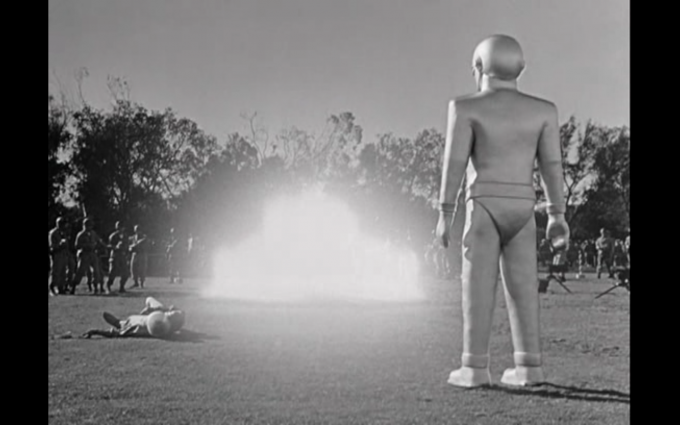
Only lever I can see working right now is to stop everything.
Everything, as in "The Day the Earth Stood Still"
That gets their attention.
Unlikely examples below, for fun.
Taking away money is almost as good as taking away guns.
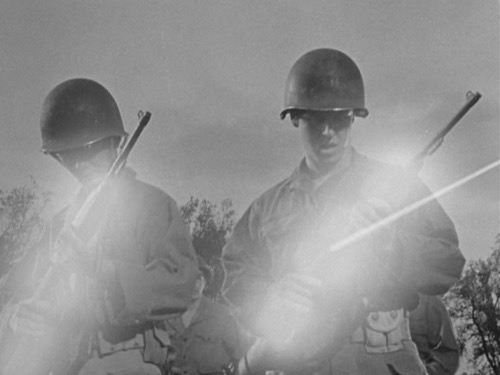
Better than this? Probably so.