Welcome to DU! The truly grassroots left-of-center political community where regular people, not algorithms, drive the discussions and set the standards. Join the community: Create a free account Support DU (and get rid of ads!): Become a Star Member Latest Breaking News Editorials & Other Articles General Discussion The DU Lounge All Forums Issue Forums Culture Forums Alliance Forums Region Forums Support Forums Help & Search

mahatmakanejeeves

(69,329 posts)
Thu Mar 12, 2026, 03:16 PM Yesterday

25-year-old OC man dies after rattlesnake bite

25-year-old OC man dies after rattlesnake bite

By Alexa Mae Asperin | Published March 12, 2026 10:11am PDT | Orange County | FOX 11 |
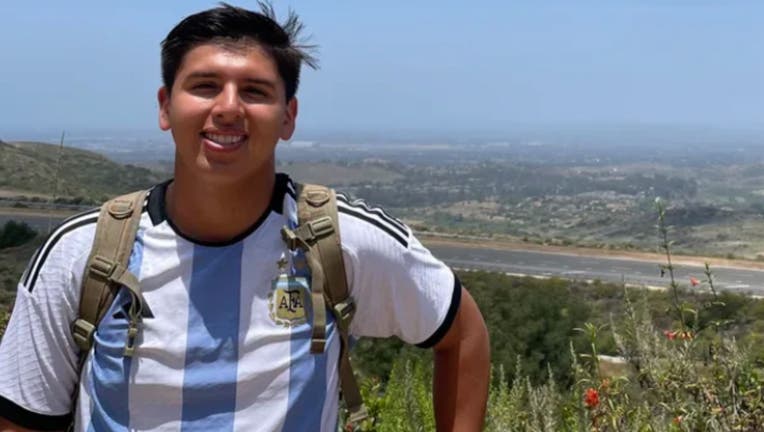

Julian Hernandez / GoFundMe

The Brief
• Julian Enrique Hernandez has died after a month-long battle in the ICU following a rattlesnake bite at an Irvine trailhead.
• It happened on February 1 near the Quail Hill Community Center while Hernandez was mountain biking, leading to his death on March 4.
• The Orange County Coroner’s Office officially confirmed the cause of death as an animal bite, marking a rare and tragic outcome for a local rattlesnake encounter.

IRVINE, Calif. - A local mountain biking excursion turned fatal for a Costa Mesa man who passed away this week after being bitten by a rattlesnake at an Irvine trailhead.

What we know:
The Irvine Police Department confirmed that the incident took place on February 1 at the Quail Hill Trailhead, located near the Quail Hill Community Center at 39 Shady Canyon Drive.

Julian Enrique Hernandez, 25, was mountain biking in the area when he was bitten by a rattlesnake, officials said. He was immediately transported to a nearby hospital and placed in an Intensive Care Unit (ICU). Despite over a month of treatment, Hernandez died from injuries sustained during the encounter.

The Orange County Coroner’s Office identified the victim as Hernandez and officially attributed his March 4 death to an animal bite.

{snip}
5 replies = new reply since forum marked as read
Highlight: NoneDon't highlight anything 5 newestHighlight 5 most recent replies
25-year-old OC man dies after rattlesnake bite (Original Post) mahatmakanejeeves Yesterday OP
Julian Clouds Passing Yesterday #1
This is tragic. But please don't learn the wrong lesson. Rattlesnake bites are rare, and usually nonfatal. RockRaven Yesterday #2
TY ret5hd Yesterday #3
The first thing is to learn the markings of the venomous snakes in your area so that you can report it to medical peeps. 3Hotdogs Yesterday #4
In Scouts, youth are taught to use a constriction band..... lastlib Yesterday #5

RockRaven

(19,177 posts)
2. This is tragic. But please don't learn the wrong lesson. Rattlesnake bites are rare, and usually nonfatal.
Thu Mar 12, 2026, 03:39 PM
Yesterday

If you encounter a rattlesnake, don't freak out.
Don't try to kill it to protect yourself.
Don't try to move it.
Just stay away from it.
Leave it alone.

https://nhm.org/stories/misplaced-fears-rattlesnakes-are-not-dangerous-ladders-trees-dogs-or-large-tvs

In the U.S., the snakes typically involved in human fatalities include native species like rattlesnakes, copperheads, and cottonmouths as well as a number of non-native species that are sometimes kept as pets, both legally and illegally, and zoo animals. There are also three species of coral snakes in the U.S., but with their small mouths and fangs, bites to people are rare and usually involve a person handling the snake. To avoid being bitten by a coral snake, follow this simple rule: Don’t pick it up. Here in Southern California, there are seven species of rattlesnakes (making this herpetologist quite happy to live here). Most are found in the deserts, but the Southern Pacific Rattlesnake is common in the foothills and mountains surrounding the larger coastal cities. Each year, around 7,000–8,000 people are bitten by venomous snakes in the U.S. This may sound like a large number, but given that the U.S. population is quickly approaching 324 million people, this represents a tiny proportion of the population (less than 0.0025%). Of these 8,000 or so bites, on average, 5–6 result in fatalities (Table 1). This means, you are 6 times more likely to die from a lightning strike or a dog attack, 8 times more likely to die from a TV set or other large furniture falling on you, 14 times more likely to die falling out of a tree, and 95 times more likely to die falling off a ladder. Of course all of these numbers pale in comparison to risks posed by car accidents (over 30,000 fatalities per year) or of dying of heart disease or cancer, which are the two leading causes of mortality in the U.S. (Table 1). Despite the reality of the low risks from animal attacks in the U.S., snakebites and also shark bites (less than one fatality per year in the U.S.) get a huge amount of attention in the popular press.

3Hotdogs

(15,293 posts)
4. The first thing is to learn the markings of the venomous snakes in your area so that you can report it to medical peeps.
Thu Mar 12, 2026, 04:03 PM
Yesterday

Old time advise was to try to cut an X across the wound and try (or a friend) try to suck out the venom. This idea has been abandoned because of the possibility of a mouth sore being infused with venom.

If you have an iPhone or Apple Watch, learn how to use the emergency satellite beacon.

lastlib

(28,105 posts)
5. In Scouts, youth are taught to use a constriction band.....
Thu Mar 12, 2026, 05:19 PM
Yesterday

...and ice pack to reduce circulation around the bite; keep the bite lower than the heart; and above all, keep the victim CALM. Excitement causes blood to circulate more rapidly, carrying venom through the body more quickly. That's where the danger lies.

BTW, the constriction band (which can be anything like a shoelace, or a belt--anything that can go around an affected limb) is NOT a TOURNIQUET! It should be loose enough that it doesnt totally cut off circulation; whereas, a tourniquet DOES completely cut off blood flow, and is ONLY used where life is endangered.

Latest Discussions»Region Forums»California»25-year-old OC man dies a...