Archaeologists Discover Massive 8,000-Year-Old Petroglyph Complex in Venezuela
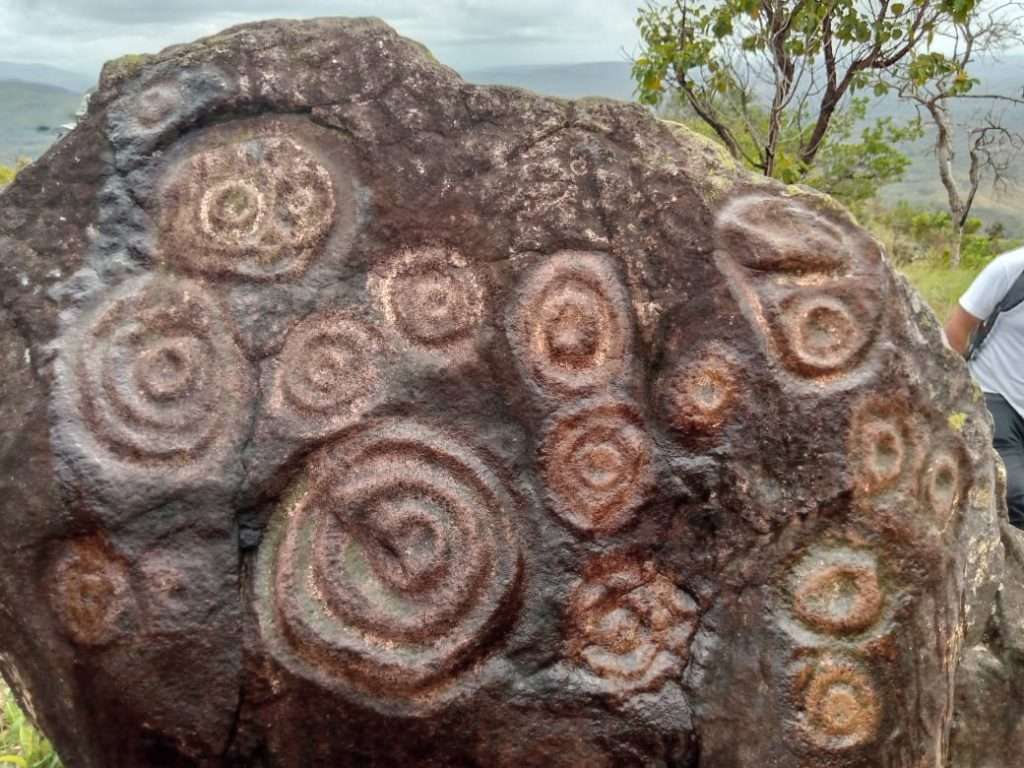
A remarkable archaeological discovery in northeastern Venezuela is drawing international attention after authorities confirmed the finding of a major petroglyph complex estimated to be between 4,000 and 8,000 years old. The ancient rock carvings were uncovered on January 30 in the highland community of Quebrada Seca, located 3.5 kilometers from San Félix in Cedeño municipality, in Monagas state, at an elevation of 647 meters above sea level.
Officials from Venezuela’s National Land Institute and local authorities announced the discovery, describing it as one of the most significant archaeological finds in the country in recent years. If early dating estimates are confirmed, the Quebrada Seca petroglyphs could rank among the oldest known symbolic expressions in eastern Venezuela.
Ancient Symbols Reflect Cosmology and Migration
The newly identified stone features a striking array of engravings, including spirals, concentric circles, and anthropomorphic (humanoid) figures. Researchers believe these motifs reflect the cosmology of the region’s earliest inhabitants, symbolizing connections to the sun, water cycles, and ancestral spirits.
According to local historians, the municipality of Cedeño—whose administrative center is Caicara de Maturín—is widely regarded as the “capital of petroglyphs” in Monagas. The area preserves the cultural legacy of Indigenous groups such as the Chaimas and Kariñas, who are thought to have inhabited or traversed the region thousands of years ago.
Historian Luis Peñalver described the discovery as a milestone, noting that it not only confirms the presence of ancient rock art in Cedeño but also strengthens the region’s status as a key transit and settlement corridor in eastern Venezuela. The engravings suggest that the area may have served as a strategic passageway for migrating groups during the Paleoindian and Mesoindian periods, roughly between 6000 and 1700 BCE.
More:
https://arkeonews.net/archaeologists-discover-massive-8000-year-old-petroglyph-complex-in-venezuela/
