Environment & Energy
Related: About this forum
Hydrogen Cooking Stove Turns Water Into Clean Fuel
Hydrogen Cooking Stove Turns Water Into Clean Fuel
Shreya Singh | electronicsforu.com | April 10, 2026
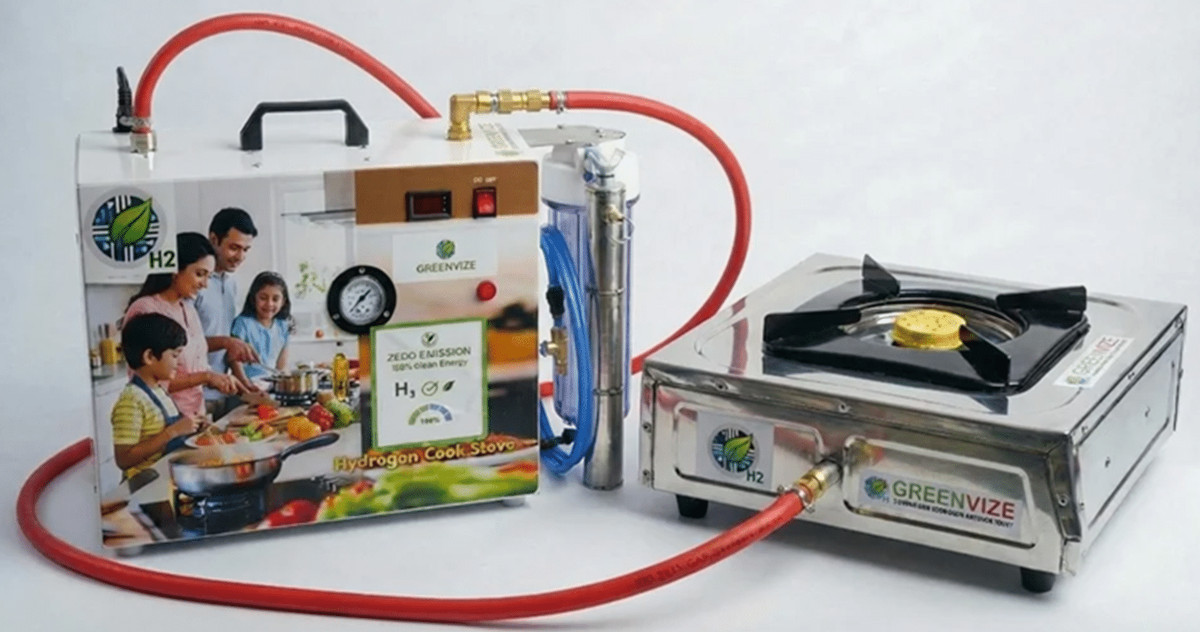
A new hydrogen cooking stove is redefining how fuel can be generated and used in everyday kitchens. Developed by Indian clean-tech startup GreenVize, the system converts water into hydrogen fuel in real time, offering a cleaner and potentially more flexible alternative to conventional cooking methods.
At the heart of the system is a proton exchange membrane (PEM) electrolyzer integrated directly into the cooking unit. This allows users to produce hydrogen on demand simply by turning a knob. The process splits water into hydrogen and oxygen through electrolysis, eliminating the need for external fuel storage or distribution infrastructure.
The hydrogen generated is immediately used for cooking, while the only byproduct released is water vapor, making the system environmentally friendly. Additionally, the oxygen produced during the process is released into the surrounding environment, which can help improve local air quality.
According to the company, the stove requires just 100 milliliters of distilled or reverse osmosis water and about one kilowatt-hour (kWh) of electricity to deliver up to six hours of continuous cooking. This efficiency makes it particularly appealing for areas with limited access to traditional gas networks or unreliable electricity supply. The unit can also be paired with rooftop solar panels, enabling a more sustainable and decentralized energy setup...more
https://www.electronicsforu.com/news/hydrogen-cooking-stove-turns-water-into-clean-fuel
GreenVize
https://www.greenvize.com/
 = new reply since forum marked as read
Highlight:
NoneDon't highlight anything
5 newestHighlight 5 most recent replies
= new reply since forum marked as read
Highlight:
NoneDon't highlight anything
5 newestHighlight 5 most recent replies

eppur_se_muova
(42,023 posts)True, the stove itself doesn't produce CO2 directly, but the power plant from which it draws its power probably does.
BTW, they've had welding torches that operate the same way for years. They're more portable than ones that require bulky H2 gas cylinders, which is their intended advantage. They do the same thing this system does: input electrical energy to "unburn" H2O and convert it to H2, then burn the H2 to produce H2O and heat. Since nothing is 100% efficient, the energy available in the form of heat is quite measurably less than the amount that was consumed in electrical power. Again, unless your electricity is not from fossil fuel plants, this is less efficient -- therefore more polluting -- than just using an electric stove.
It's nice that it generates less indoor pollution than gas or wood-burning stoves, but again, the same is true of electric stoves. The pollution is produced at a far-away power plant, not in your home. You still get to breathe some of it, just not as soon.
The suggestion that it would be desirable in areas where electricity is unreliable may have a bit more merit -- it depends how much H2 you can store, I would think. Intermittent electricity could be "buffered" by conversion to H2 and building up a supply, then recharge when electricity is back on. Not sure if the economics of that will make sense, though -- that would be heavily dependent on local conditions.
ETA: That last para -- it's effectively functioning as a UPS* for your stove. 
* Uninterruptible Power Supply, for those who haven't seen that TLA** before.
** Three-Letter Acronym

NNadir
(38,156 posts)...children the false idea that hydrogen is "green."
It's a disgusting fraud, since like hydrogen, including almost everywhere in the world (except France), electricity is generated overwhelmingly by fossil fuels.
Of course, most of the world's hydrogen is not made from electricity (thankfully) but from the steam reformation of fossil fuels, contributing close to a billion tons of carbon dioxide to the atmosphere annually.
It is not nice to spread ignorance to children, especially with a very dangerous toy.