Welcome to DU!
The truly grassroots left-of-center political community where regular people, not algorithms, drive the discussions and set the standards.
Join the community:
Create a free account
Support DU (and get rid of ads!):
Become a Star Member
Latest Breaking News
Editorials & Other Articles
General Discussion
The DU Lounge
All Forums
Issue Forums
Culture Forums
Alliance Forums
Region Forums
Support Forums
Help & Search
Foreign Affairs
Related: About this forum
Putin is Failing. These Charts Prove It. - The Russian Dude
In today’s analysis, we break down the latest developments in the Russia-Ukraine war and examine why a growing body of data and battlefield indicators suggests that Vladimir Putin’s long-term strategy may be facing deeper structural problems than the Kremlin admits. While Russia continues to claim incremental territorial advances across parts of eastern Ukraine, the pace of those gains tells a very different story when measured against the enormous cost in manpower, equipment, logistics, and economic resources required to sustain them. This episode analyzes the latest Russia-Ukraine war news, frontline updates from the Institute for the Study of War, and emerging geopolitical signals that together reveal a more complicated strategic picture: a war that is still moving, but far more slowly than Moscow’s attrition strategy requires to succeed.
We explore how Russia’s battlefield progress in Donetsk and Luhansk remains limited despite months of continuous offensive operations across a front line stretching hundreds of miles, raising serious questions about the sustainability of Russia’s war strategy. Using military analysis and strategic assessments, the video examines how Russia’s approach relies on persistent pressure rather than decisive breakthroughs, a method that requires enormous logistical support, steady manpower replacements, and long-term political stability inside Russia itself. As the war enters another critical phase, the question becomes whether this slow strategy can continue producing results without creating economic strain, manpower shortages, and internal pressure within the Russian system.
Beyond the battlefield, global developments are also beginning to reshape the strategic environment surrounding the conflict. Rising energy prices triggered by tensions in the Middle East could influence Russia’s war economy, since oil and natural gas exports remain one of the Kremlin’s most important financial lifelines. At the same time, sanctions, export restrictions, and limitations on Russia’s energy trade continue to constrain how much Moscow can actually benefit from higher oil prices. The video also examines the mysterious incident involving a Russian oil tanker fire in the Mediterranean Sea, which may illustrate how the war’s ripple effects are spreading beyond Ukraine’s borders and into global maritime infrastructure and energy supply routes.
Inside Russia, internal political debates are becoming more visible as nationalist commentators and hardliners push for escalation, arguing that geopolitical distractions elsewhere in the world could create opportunities for Moscow to intensify pressure on Ukraine. Meanwhile, European leaders are sending strong diplomatic signals about the future of Western support for Kyiv. Germany’s leadership has warned against pressuring Ukraine into territorial concessions, emphasizing that allowing borders to change through military force could create long-term instability across Europe and undermine the continent’s security architecture.
Perhaps the most revealing development, however, comes from inside Russia itself. Reports indicate that the Kremlin is now encouraging war veterans to join the police force to address a massive domestic law-enforcement staffing shortage that may exceed two hundred thousand officers. This policy highlights a broader structural strain caused by prolonged mobilization and continuous military recruitment, as the diversion of working-age men into the armed forces begins to create shortages in other critical sectors of the Russian state apparatus. The development illustrates how long wars affect not only the battlefield but also domestic governance, workforce stability, and the functioning of key institutions inside the country.
Taken together, these developments — slow territorial gains, sustained frontline pressure, geopolitical escalation risks, energy market shifts, European diplomatic warnings, and internal Russian staffing shortages — suggest that the war in Ukraine is entering a new and more complex phase. The conflict is not frozen, but evolving in ways shaped by military realities, global economics, and political decisions in Moscow, Kyiv, Washington, and European capitals.
1 replies
 = new reply since forum marked as read
Highlight:
NoneDon't highlight anything
5 newestHighlight 5 most recent replies
= new reply since forum marked as read
Highlight:
NoneDon't highlight anything
5 newestHighlight 5 most recent replies
= new reply since forum marked as read
Highlight:
NoneDon't highlight anything
5 newestHighlight 5 most recent replies
Putin is Failing. These Charts Prove It. - The Russian Dude (Original Post)
TexasTowelie
11 hrs ago
OP
Russia is hiding true economic cost of Ukraine war, German intelligence claims
LetMyPeopleVote
5 hrs ago
#1

LetMyPeopleVote
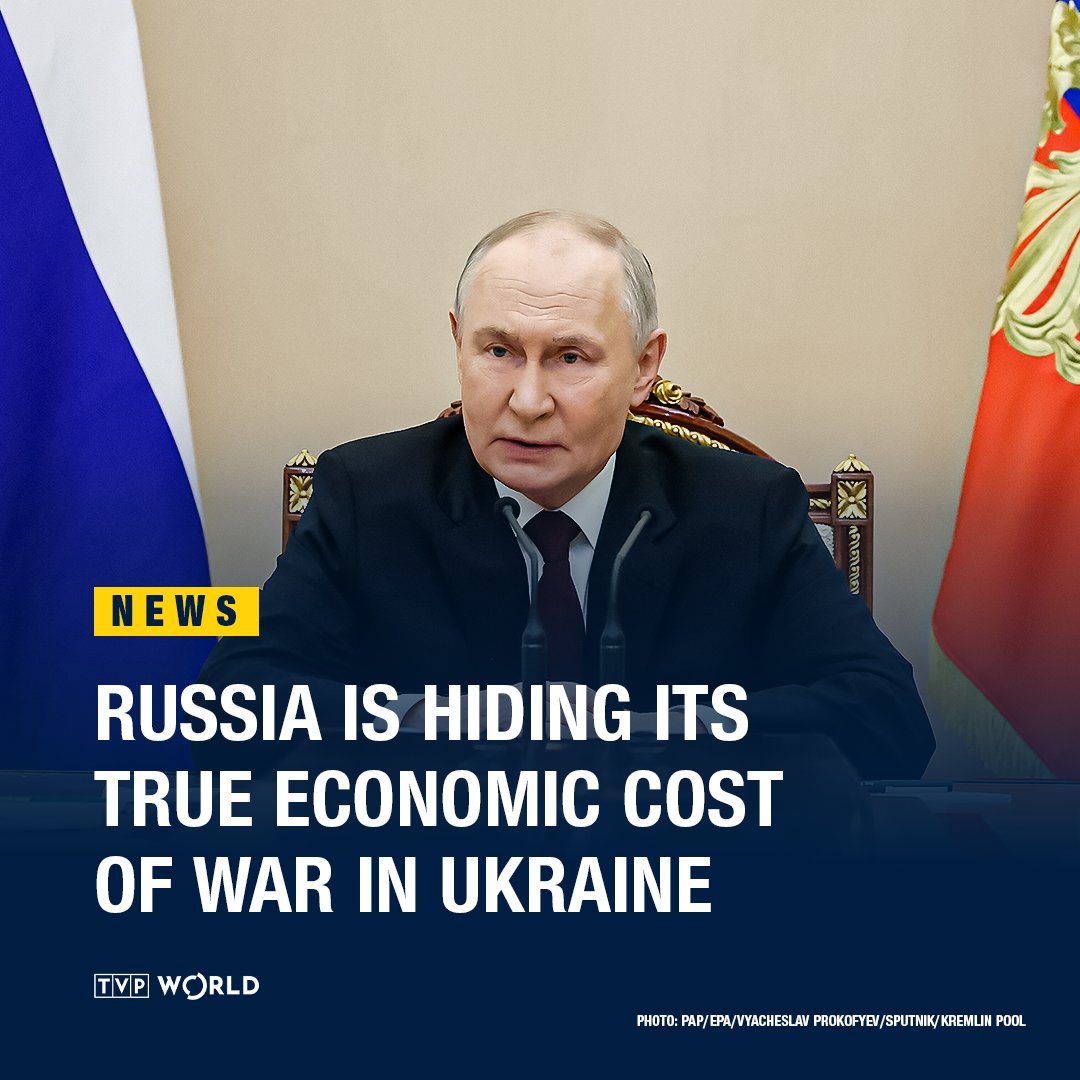
(178,387 posts)1. Russia is hiding true economic cost of Ukraine war, German intelligence claims
Putin is losing
Link to tweet
https://tvpworld.com/91927281/german-intelligence-russia-hiding-true-economic-cost-of-war-against-ukraine
Germany's intelligence service on Wednesday accused Moscow of hiding the true cost of the war in Ukraine, saying Russia's budget deficit in 2025 was more than 2.36 trillion roubles ($30.45 billion) higher than officially stated.
In a post on LinkedIn, the BND said Western sanctions were having a "clear effect" on the Russian economy, alongside significantly lower oil and gas revenues due to a sharp fall in global prices.
"Putin is sacrificing Russia's economic future for his imperial goals," the intelligence service said.
The Kremlin last week said falling revenues and a growing budget deficit were "routine difficulties" and fixable thanks to overall macroeconomic stability.
Russian revenues from sales of oil, its main export commodity, have fallen because Moscow has been forced to sell it at a greater discount on global markets due to Western sanctions and U.S. pressure on major buyers.
The BND put Russia's federal budget deficit at 8.01 trillion roubles compared to the official figure of 5.65 trillion that equates to 2.6% of GDP. It did not divulge detailed calculations on how it arrived at the precise figure, and did not immediately reply to a request for further comment.
Russia's consolidated budget deficit, which includes regional budgets, substantially deteriorated in 2025, reaching 8.3 trillion roubles or 3.9% of GDP, 2.6-fold more than in 2024 due to falling revenues and increased expenditure.
In a post on LinkedIn, the BND said Western sanctions were having a "clear effect" on the Russian economy, alongside significantly lower oil and gas revenues due to a sharp fall in global prices.
"Putin is sacrificing Russia's economic future for his imperial goals," the intelligence service said.
The Kremlin last week said falling revenues and a growing budget deficit were "routine difficulties" and fixable thanks to overall macroeconomic stability.
Russian revenues from sales of oil, its main export commodity, have fallen because Moscow has been forced to sell it at a greater discount on global markets due to Western sanctions and U.S. pressure on major buyers.
The BND put Russia's federal budget deficit at 8.01 trillion roubles compared to the official figure of 5.65 trillion that equates to 2.6% of GDP. It did not divulge detailed calculations on how it arrived at the precise figure, and did not immediately reply to a request for further comment.
Russia's consolidated budget deficit, which includes regional budgets, substantially deteriorated in 2025, reaching 8.3 trillion roubles or 3.9% of GDP, 2.6-fold more than in 2024 due to falling revenues and increased expenditure.