Jupiter Is Not The Size And Shape We've Long Thought It Was
14 February 2026
By Michael Irving
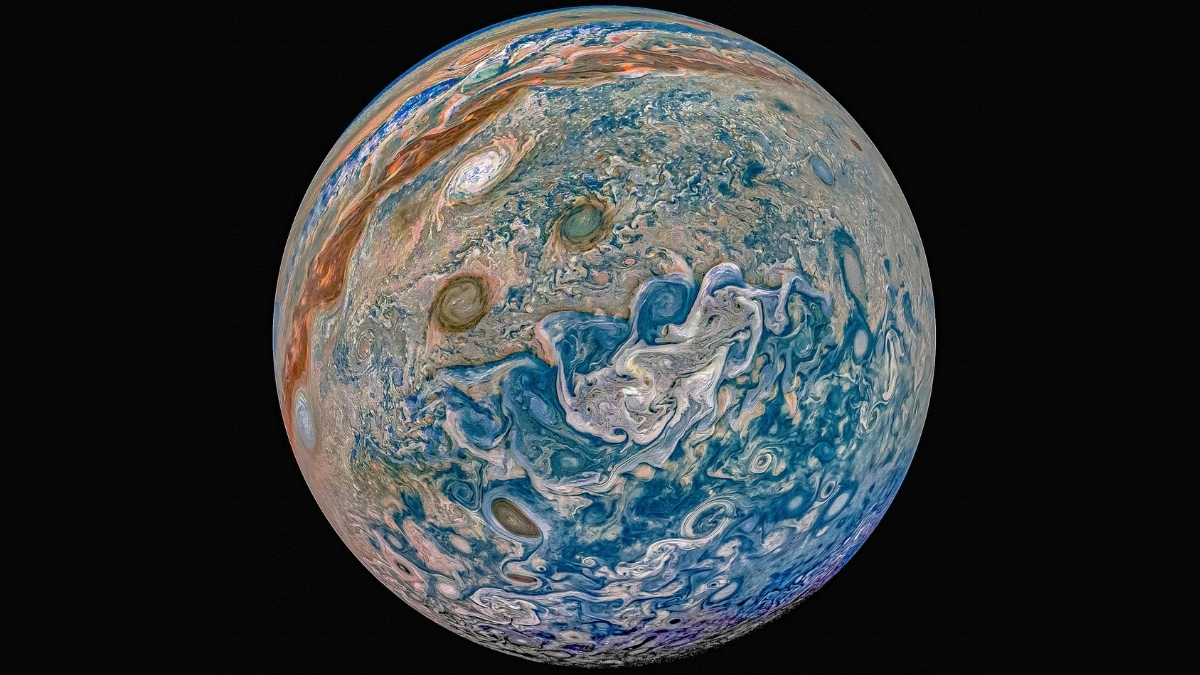
An image of Jupiter snapped by Juno in 2019. (NASA/JPL-Caltech/SwRI/MSSS/Prateek Sarpal, CC NC SA)
The biggest planet in our Solar System just got a little smaller. Okay, not physically, but our measurements of Jupiter just got more precise, and it turns out there's slightly less of the giant than we thought.
According to the new data, Jupiter's radius measures 71,488 kilometers (44,421 miles) at its equator, and the planet rises 66,842 kilometers from its center to its north pole. That makes it 4 kilometers narrower each side at the equator, and 12 kilometers 'flatter' at each pole, than previous measurements suggested.
It's not a major adjustment, obviously, but it actually does make a difference to our models.
"These few kilometers matter," says Eli Galanti, planetary scientist at the Weizmann Institute of Science in Israel. "Shifting the radius by just a little lets our models of Jupiter's interior fit both the gravity data and atmospheric measurements much better."
More:
https://www.sciencealert.com/jupiter-is-not-the-size-and-shape-weve-long-thought-it-was

 = new reply since forum marked as read


