Welcome to DU!
The truly grassroots left-of-center political community where regular people, not algorithms, drive the discussions and set the standards.
Join the community:
Create a free account
Support DU (and get rid of ads!):
Become a Star Member
Latest Breaking News
Editorials & Other Articles
General Discussion
The DU Lounge
All Forums
Issue Forums
Culture Forums
Alliance Forums
Region Forums
Support Forums
Help & Search
Anthropology
Related: About this forum
Leonardo da Vinci's DNA may be embedded in his art
Leonardo da Vinci's DNA may be embedded in his art — and scientists think they've managed to extract someIn a first, scientists have extracted DNA from a Renaissance-era drawing attributed to Leonardo da Vinci, but they can't be sure that the genetic material belongs to the Italian polymath.
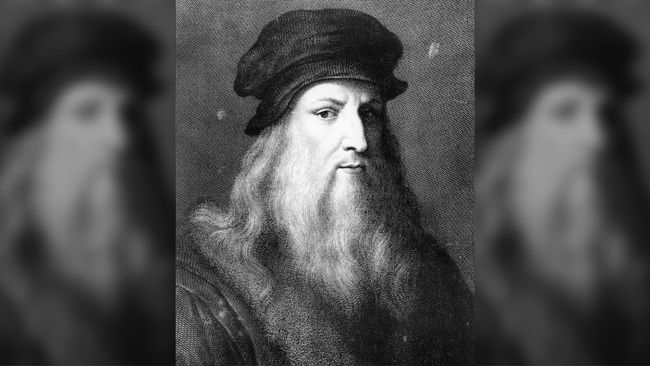
Scientists say they may have extracted Leonardo da Vinci's DNA from a Renaissance-era drawing for the very first time. The trace DNA, embedded in a red chalk sketch called the "Holy Child" that some claim was made by da Vinci, shows similarities with genetic material recovered from a letter penned in the 1400s by Frosino di ser Giovanni da Vinci, a cousin of Leonardo da Vinci's grandfather, Antonio da Vinci.
Specifically, the drawing and the letter contain Y chromosome sequences that match those of a haplogroup, or genetic lineage, with a common ancestor in Tuscany, where Leonardo da Vinci was born. The researchers published their findings Tuesday (Jan. 6) to the preprint database bioRxiv, so they have not yet been peer reviewed.
Because Y chromosome sequences are passed down almost unchanged from father to son, the recovery of these sequences is "a great starting point" for researchers who want to piece together Leonardo da Vinci's DNA, Charlie Lee, a geneticist who leads the Jackson Laboratory for Genomic Medicine in Connecticut who was not involved in the study, told Science. However, some experts don't think Leonardo da Vinci drew "Holy Child" himself, believing instead that one of his students made the sketch.
As a result, "it's a flip of a coin" whether the DNA from the drawing is da Vinci's, said Lee. The genetic material could belong to a student or to any number of curators with Tuscan roots who handled the drawing over the years, Science reported. Researchers want to reconstruct da Vinci's DNA to help authenticate some of his art. Some experts also suggest the Italian polymath's genetic material could reveal biological reasons for his exceptional artistic and other abilities, such as better-than-normal vision.
As a result, "it's a flip of a coin" whether the DNA from the drawing is da Vinci's, said Lee. The genetic material could belong to a student or to any number of curators with Tuscan roots who handled the drawing over the years, Science reported.
https://www.livescience.com/health/genetics/leonardo-da-vincis-dna-may-be-embedded-in-his-art-and-scientists-think-theyve-managed-to-extract-some
2 replies
 = new reply since forum marked as read
Highlight:
NoneDon't highlight anything
5 newestHighlight 5 most recent replies
= new reply since forum marked as read
Highlight:
NoneDon't highlight anything
5 newestHighlight 5 most recent replies
= new reply since forum marked as read
Highlight:
NoneDon't highlight anything
5 newestHighlight 5 most recent replies
Leonardo da Vinci's DNA may be embedded in his art (Original Post)
Bayard
Jan 2026
OP

rampartd
(5,431 posts)1. 1/2 of florence must have that y chromosome
sure, it might be mice to study if this dna has interesting mutations, but what are they going to do ? clone him?

Duppers
(28,477 posts)2. May not be a bad idea❗😁
