Anthropology
Related: About this forum
Championships Mark the Rebirth of a Dynamic Art Form
In 1991, my father and I decided to host a unique event to preserve a Native artform that began in the Southwest and transform it into a World Championship Contest. Little did we know our collaboration would take the art of hoop dancing to unknown levels of skill and performance.
Dennis Zotigh
February 13, 2026
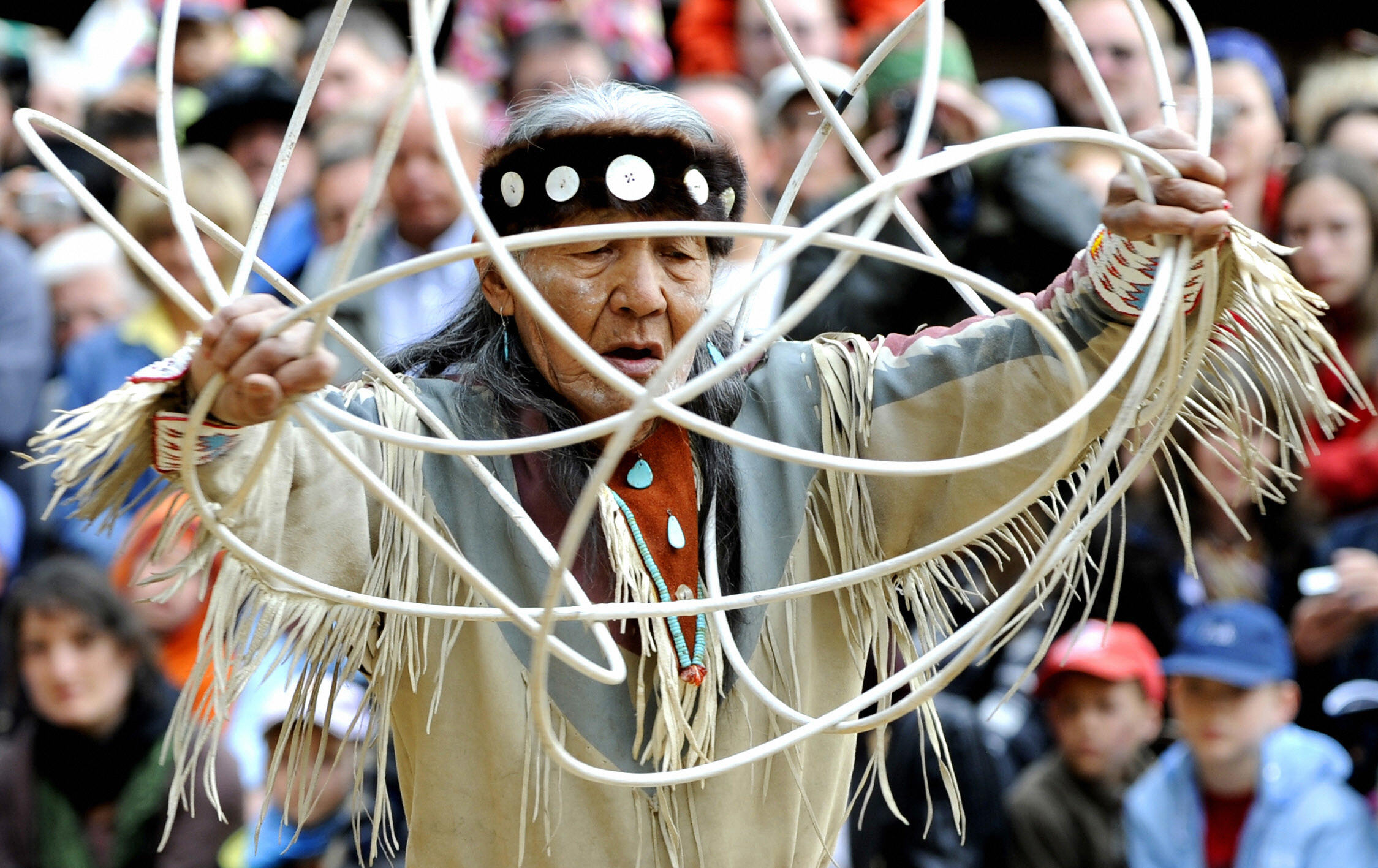
Jones Benally (Navajo, Medicine Man) at 94 years old, is considered to be the oldest living practicing hoop dancer. Courtesy of Getty Images
For centuries, Indigenous people used the hoop in ceremonies for restoring balance, harmony and encouraging healing. Tribes consider the hoop a symbol of the circle of life, in which there is no beginning or end. Medicine men and women who believed they could see visions within the hoop used it to look into the future and cure ailments.
In the 1930s, Tony White Cloud (Pueblo of Jemez) reclaimed and innovated the centuries-old ceremonial dance by being the first to use multiple hoops. He is considered to be the “founder of the modern Hoop Dance.” White Cloud used five hoops made of willow to symbolize traditional designs that were part of his traditional Pueblo upbringing. His hoop formations remain the foundation upon which contemporary hoop dancers design their routines.
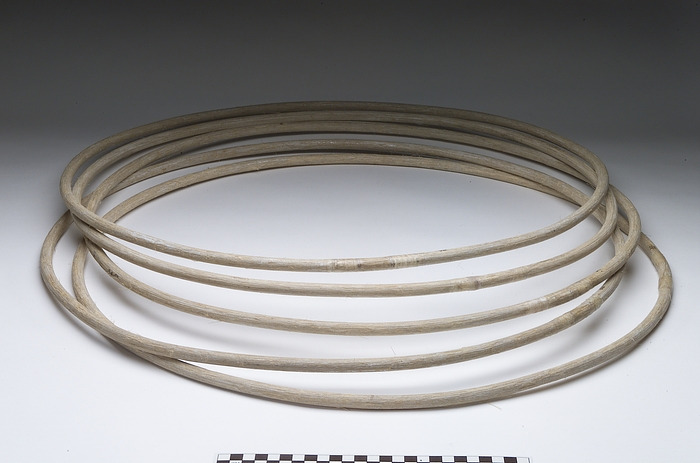
A set of wooden dance hoops donated to the NMAI by Derrick Suwaima Davis (Hopi/Choctaw) in 2002. Davis is a 7-time world hoop dance champion. National Museum of the American Indian collections
Throughout the 1930s, White Cloud performed at the American Indian Exposition in Anadarko in Oklahoma, the Gallup Indian Ceremonial in New Mexico, the Standing Rock Amphitheater in Wisconsin, and Chicago’s Railroad Fair. Native American hoop dancers who saw these performances began adopting and modifying the hoop dance to fit their own unique styles. White Cloud’s modern hoop dance debuted on the silver screen in the 1942 film Valley of the Sun, starring Lucille Ball. During World War II, alongside Gene Autry, White Cloud traveled throughout America and Europe promoting war bonds. In 1952, White Cloud was featured in Autry’s film Apache Country. In the following decades, White Cloud’s modern take on the hoop dance inspired Native Americans around the country to continue innovating the art form and broadening the skills that make it a joy to watch and a feat to master.
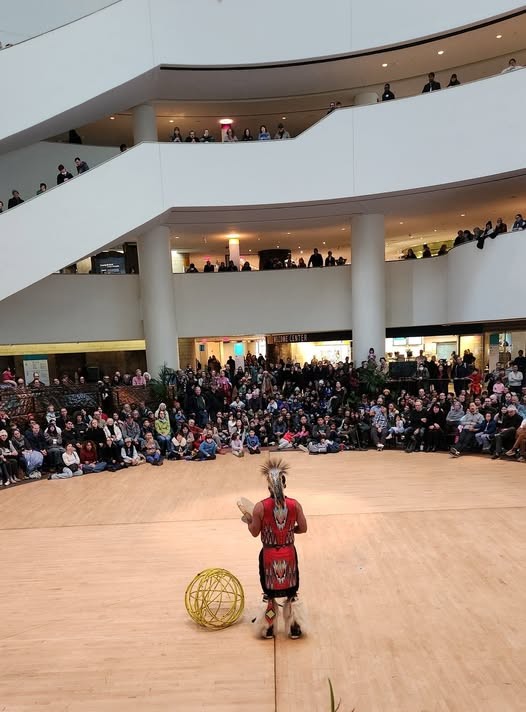
Joseph Secody (Navajo) shares a song after his hoop dance performance in the Potomac Atrium of the National Museum of the American Indian, in Washington, DC., 2025 Courtesy of Dennis Zotigh
In early 1991, I suggested holding a World Championship Hoop Dance contest to my father, Ralph Zotigh, then the Director of Entertainment at the New Mexico State Fair Indian Village, to determine who was the "Best of the Best." With a limited budget, we began planning a contest to take place during the upcoming state fair that September. Knowing each hoop dancer has their own style, I was tasked with establishing parameters for a fair judging system.
More:
https://www.smithsonianmag.com/blogs/national-museum-american-indian/2026/02/13/hoop-dance-a-dynamic-native-american-artform-of-skill/
 = new reply since forum marked as read
Highlight:
NoneDon't highlight anything
5 newestHighlight 5 most recent replies
= new reply since forum marked as read
Highlight:
NoneDon't highlight anything
5 newestHighlight 5 most recent replies
